Section 1: Electricity and Circuits
Activity 1
It is a short circuit because the wire is only connected to one side of the battery, neither bulb is lit.
It is a short circuit because the wire is only connected to one side of the battery, neither bulb is lit.
|
|
|
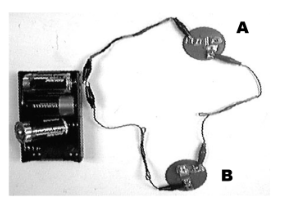
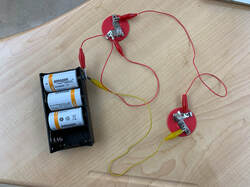
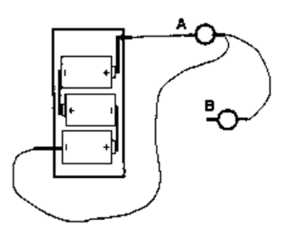
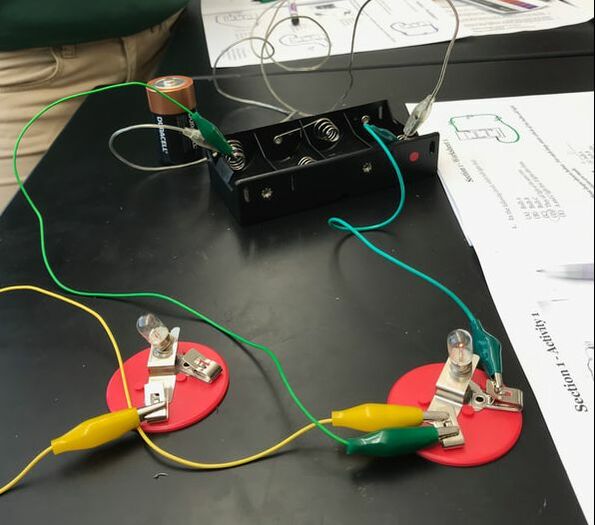
Battery and bulb A are in series, and bulb B is not in a circuit because there's no current going through. Bulb A is lit and Bulb B is unlit.
|
|
|
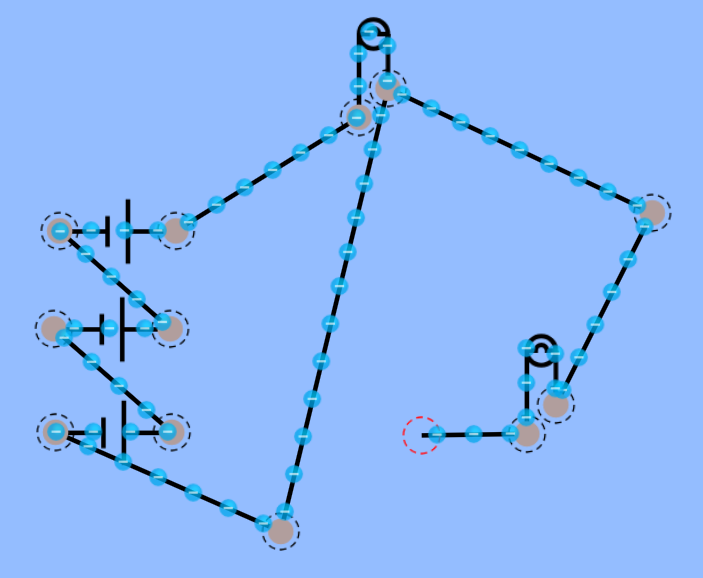
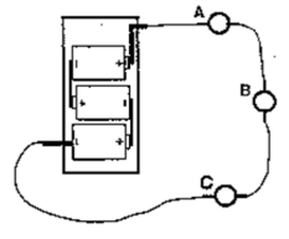
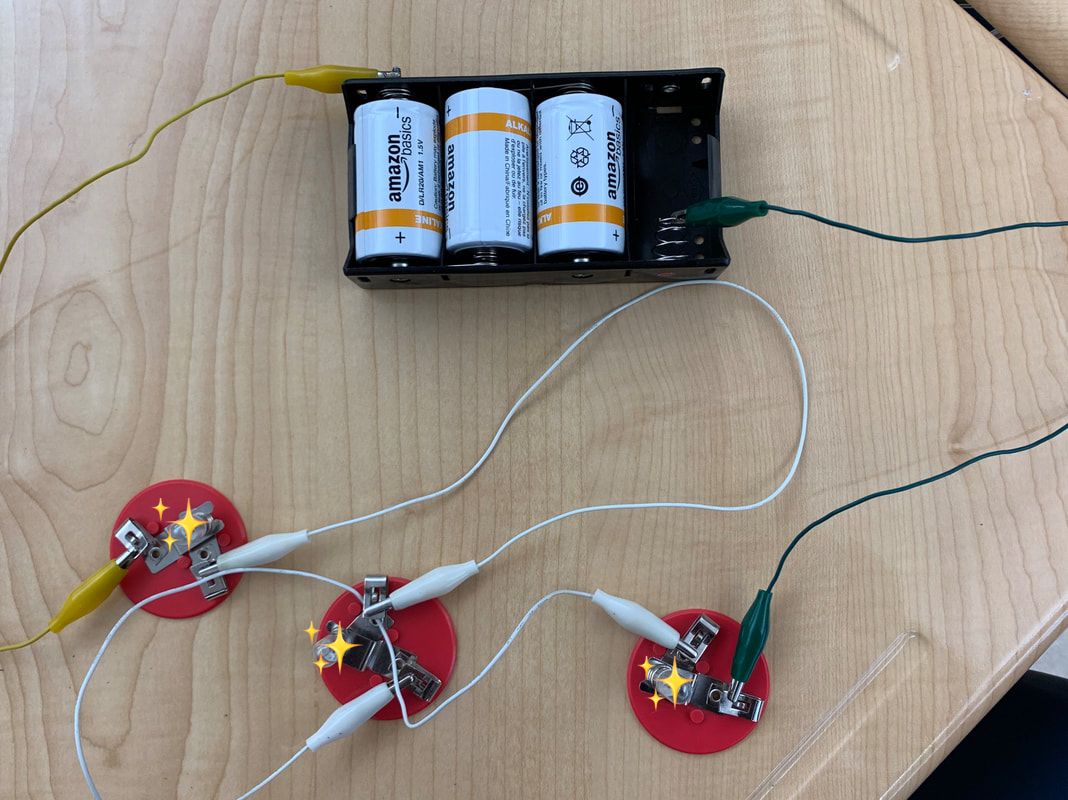
Battery and the bulbs are connected in a complete series in this case, so all three bulbs are lit.
|
|
|
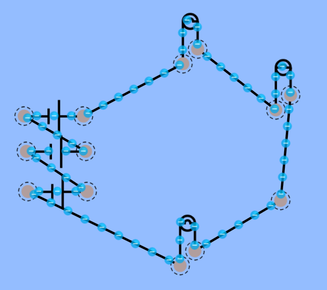
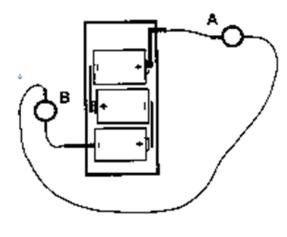
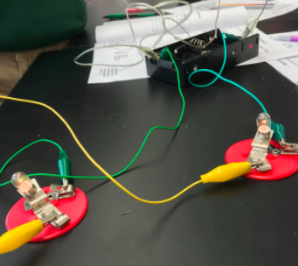
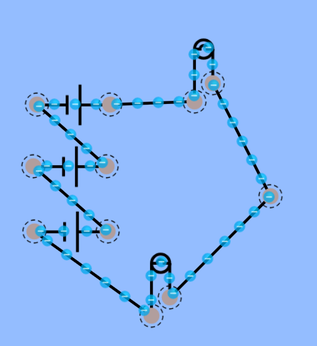
This is the same circuit in series as the previous one, but just with 2 bulbs instead of 3. Both bulbs are lit.
|
|
|
Activity 2
Goal: light up one bulb with one cell and one wire.
Goal: light up one bulb with one cell and one wire.
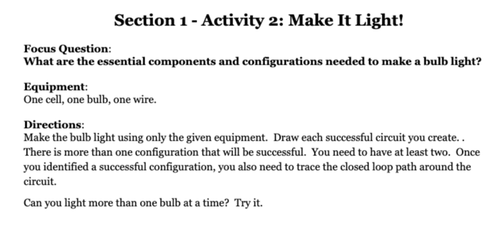
Conclusion: the circuit has to be closed for it to work, it has to connect to both sides of the battery.
|
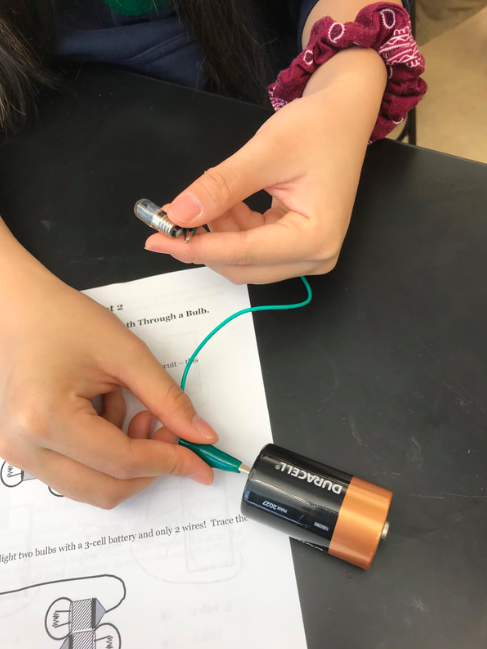
unsuccessful attempt
|
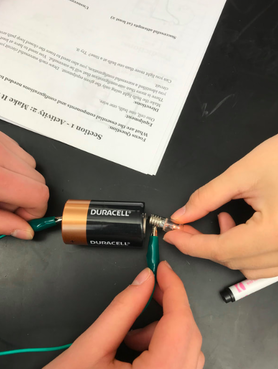
successful attempt
|
Worksheet 2
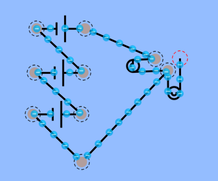
Here are some more attempts. Determine which of the bulbs will light.
Here are some more attempts. Determine which of the bulbs will light.
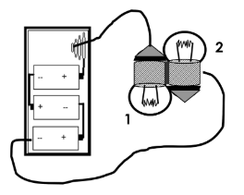
both lit
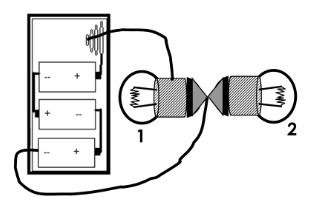
Bulb A is lit, Bulb B is unlit
|
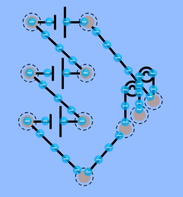
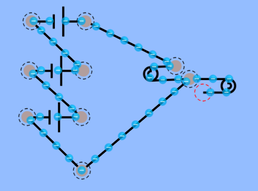
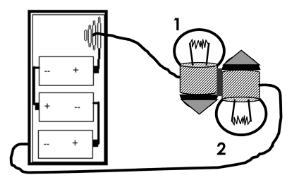
both unlit
|
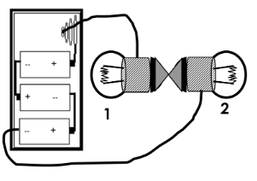
both lit
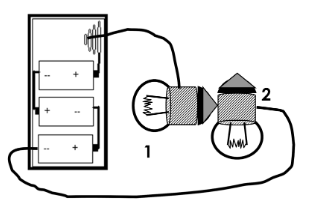
Bulb A is lit, Bulb B is unlit
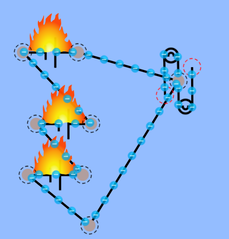
|
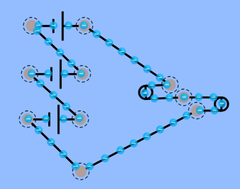
|
Activity 3
|
|
|
Section 2: Schematic Diagrams and Charge Flow
Activity 2A: Series Circuits
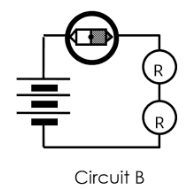
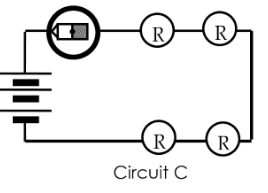
|
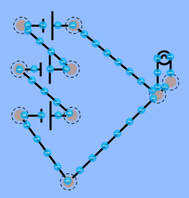
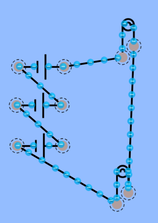
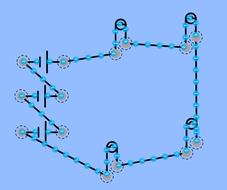
|
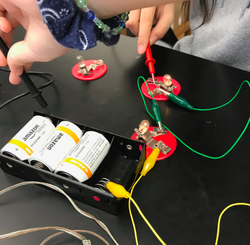 picture of the circuit that has 2 bulbs picture of the circuit that has 2 bulbs
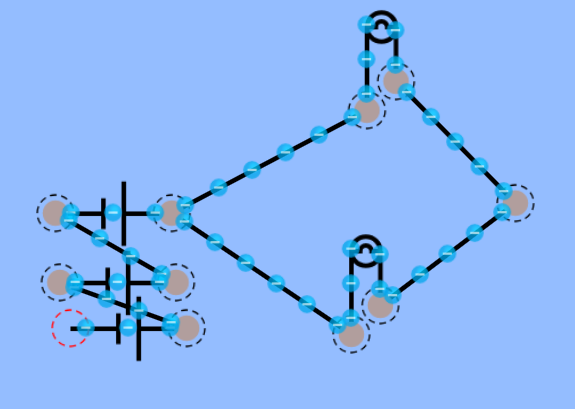
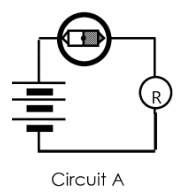
Conclusion: We found that circuit A had the greatest current and circuit C had the smallest current. This means that the bulb in circuit A was the brightest, and the bulbs in circuit C are much dimmer.
|
Activity 2B: Parallel Circuits
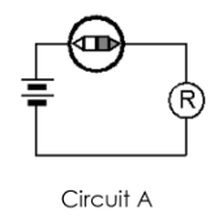
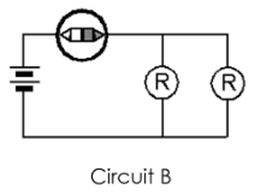
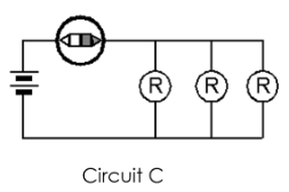
|
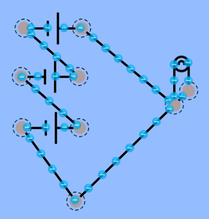
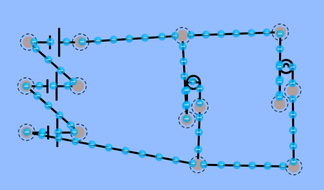
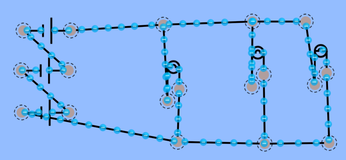
|
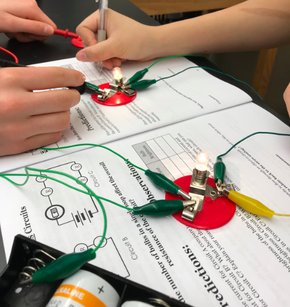
parallel w/ 2 bulbs
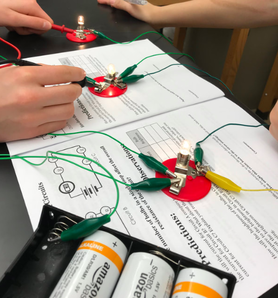
parallel w/ 2 bulbs
|
Conclusion:
We found that the current in circuit C is the greatest, and the current in circuit A is the lowest, which is the reverse in series circuits. However, the brightness of the bulbs is the same because the current through each individual bulb in parallel structure is the same for each branch.
We found that the current in circuit C is the greatest, and the current in circuit A is the lowest, which is the reverse in series circuits. However, the brightness of the bulbs is the same because the current through each individual bulb in parallel structure is the same for each branch.
- The more resistors (light bulbs) connected in parallel, the less resistance there is, the more current the circuit is going to have. Although total current increases, current through each resistor is the same.
- Maximum resistance: connect resistors in series
- Minimum resistance: connect resistors in parallel
- more charge flows through a single bulb circuit than through a two bulb circuit in a series circuit
- a single bulb shines brighter than either bulb in a two-bulb circuit in a series circuit
- the total resistance of two bulbs is greater than a single bulb in a series circuit
Widget is loading comments...
